
A good beginning. An honest conversation.
A puppy is a commitment.
Before we talk about a litter, tell me what your days look like and how you plan to make room for a Malinois.
Ask about puppies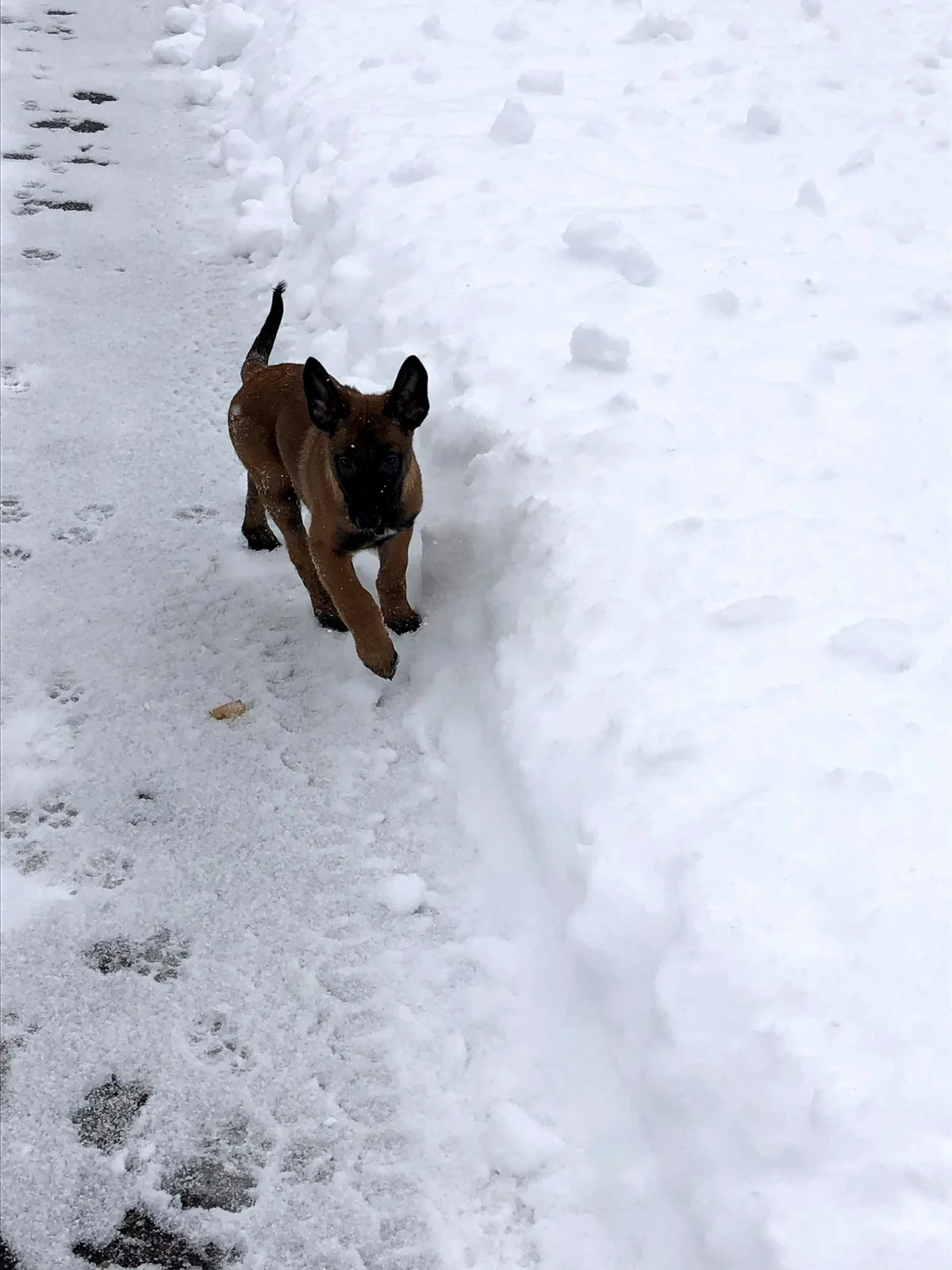
Current litter information
Start by asking.
Contact me for current and upcoming litter information. Include your timeline and whether you are considering a companion, sport prospect or working prospect. An inquiry is not a reservation or a promise that a puppy is available.
The past-litter galleries are kennel history. They are not current puppy listings. If a particular parent or pairing brought you here, tell me which one.
Raised in my home. Seen as individuals.
Early experiences are a beginning, not a guarantee of adult temperament, health or working success. I pay attention to each puppy’s responses rather than treating the litter as one personality.
Home raising & early handling.
My puppies are raised in my home. Daily care, early handling and attention to each puppy are the foundation. Gentle handling and introductions to ordinary care sit alongside the more structured parts of the program.
Early neurological stimulation: ENS / Bio-Sensor
ENS, also known as Bio-Sensor, is one part of the early program. It involves brief, structured handling, including tactile, positioning and temperature-related experiences. It is not a substitute for normal daily care, and more stimulation is not automatically better.
Ask how ENS is used with the particular litter you are considering. I do not turn those early exercises into promises about adult confidence, disease resistance or working performance.
Early scent introduction: ESI / Avidog approach
Early scent introduction gives a puppy an opportunity to encounter something unfamiliar. The Avidog approach is part of the scent-introduction program. Puppies are handled individually and allowed to respond to the scent rather than being forced to engage.
I pay attention to those responses. An early interest or lack of interest is not a prediction of a detection career. Ask about the scent-introduction work with the litter you are considering.
Everyday surfaces, sounds & care
Gradual exposure to different surfaces, household sounds, indoor and outdoor experiences, people and appropriate animal encounters is part of the raising program. Handling for grooming and ordinary care belongs in that work too.
The point is an appropriate beginning. It is not a puppy advertised as ready for every environment or role. The puppy’s age and responses matter more than checking off an exposure list.
The work continues at home.
What happens after a puppy goes home matters. Consistent care, age-appropriate activity, ongoing training and new experiences remain part of living with the dog. An early raising program cannot do that work for you.
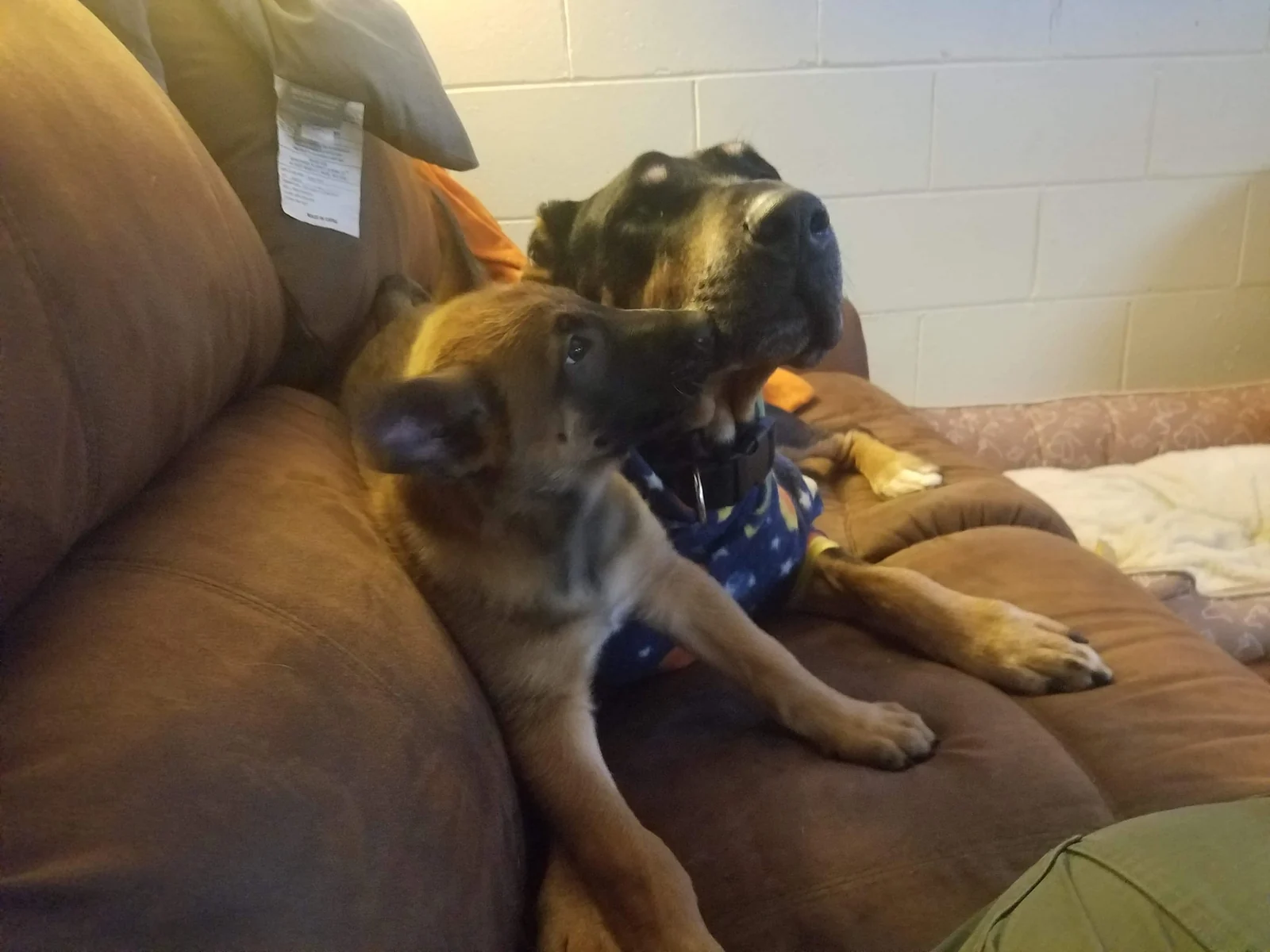
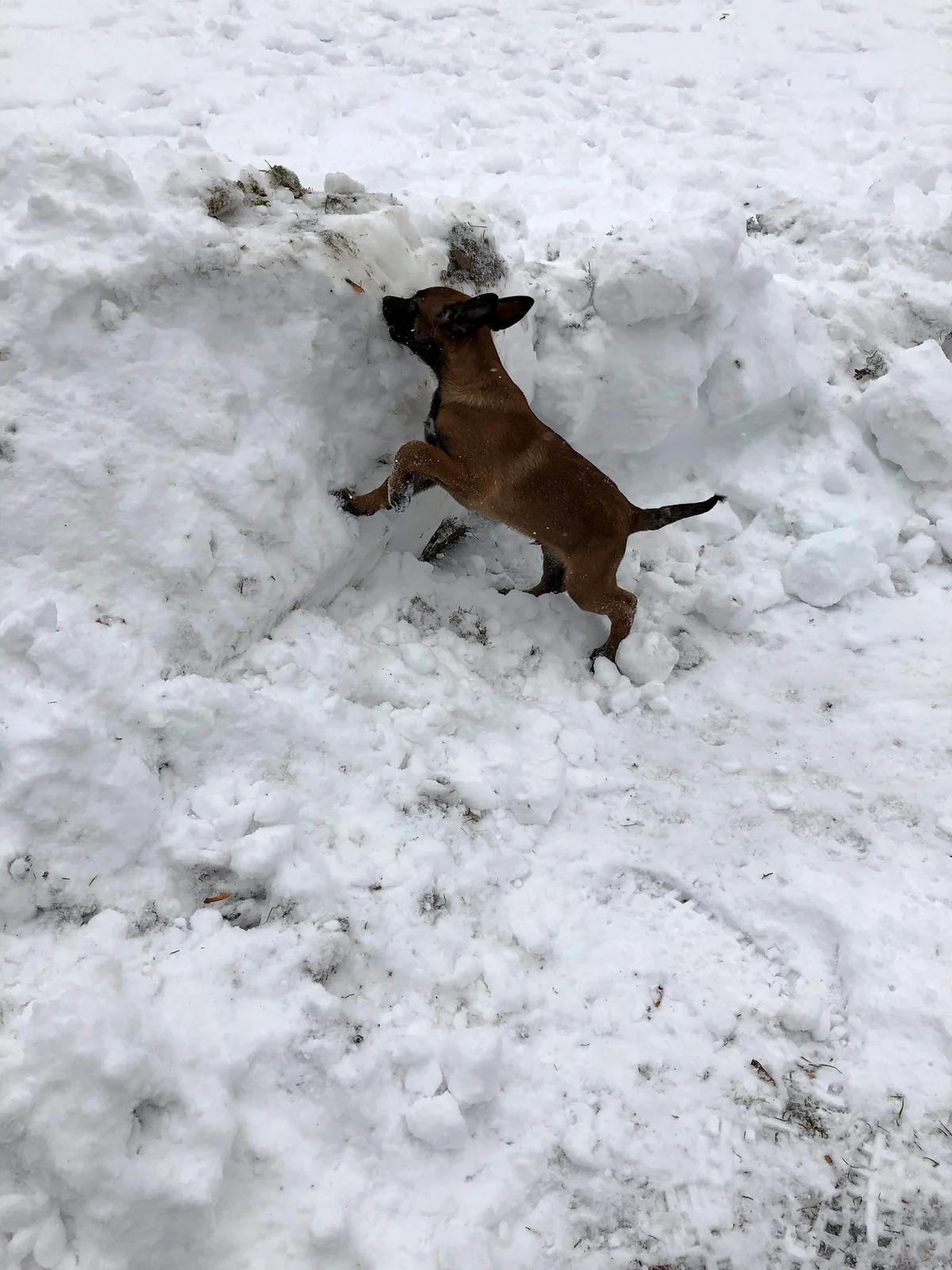
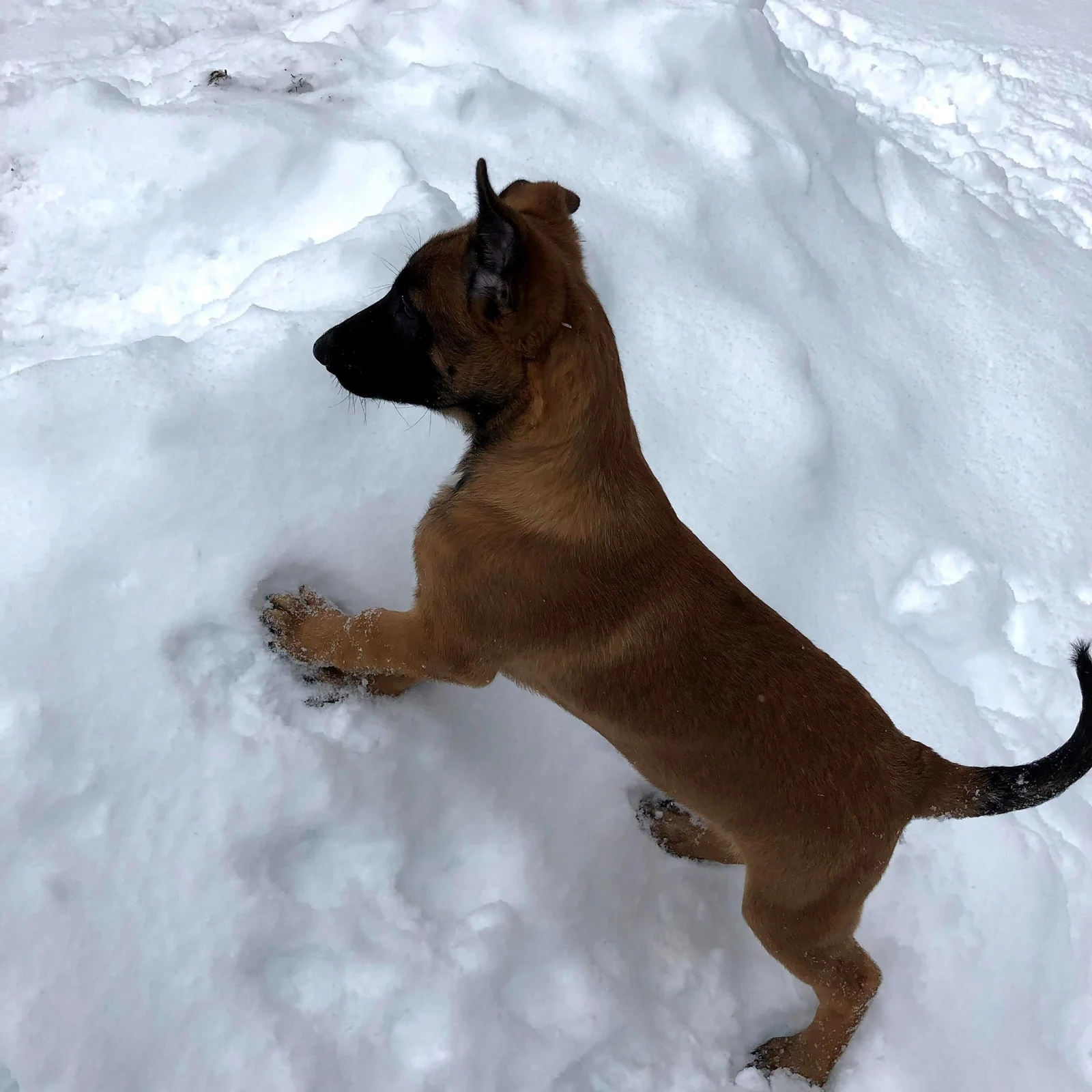
Before making a commitment
Look at the individual records.
Ask about the specific pairing, the parents’ individual health results and the pedigree. A sport title describes an accomplishment. It does not replace health information or tell you everything about a puppy.
Review the puppy’s veterinary records, vaccination and deworming history, microchip information and any applicable health certificate. Ask which documents, written terms, feeding information and training guidance apply to that litter.
No blanket health-testing claim belongs in place of the individual results. Ask to see what is available and what each result actually says.
Tell me what you’re looking for.
Your experience, household, goals and timeline help us start with the right questions.